> ## Documentation Index
> Fetch the complete documentation index at: https://docs.accumulate.supply/llms.txt
> Use this file to discover all available pages before exploring further.
# How It Works
> A simple, repeatable flow with no discretionary actions
Accumulate operates through a simple, repeatable flow. There are no discretionary actions and no conditional logic based on market conditions.
**The same process executes continuously as long as the protocol is active.**
## The Flow
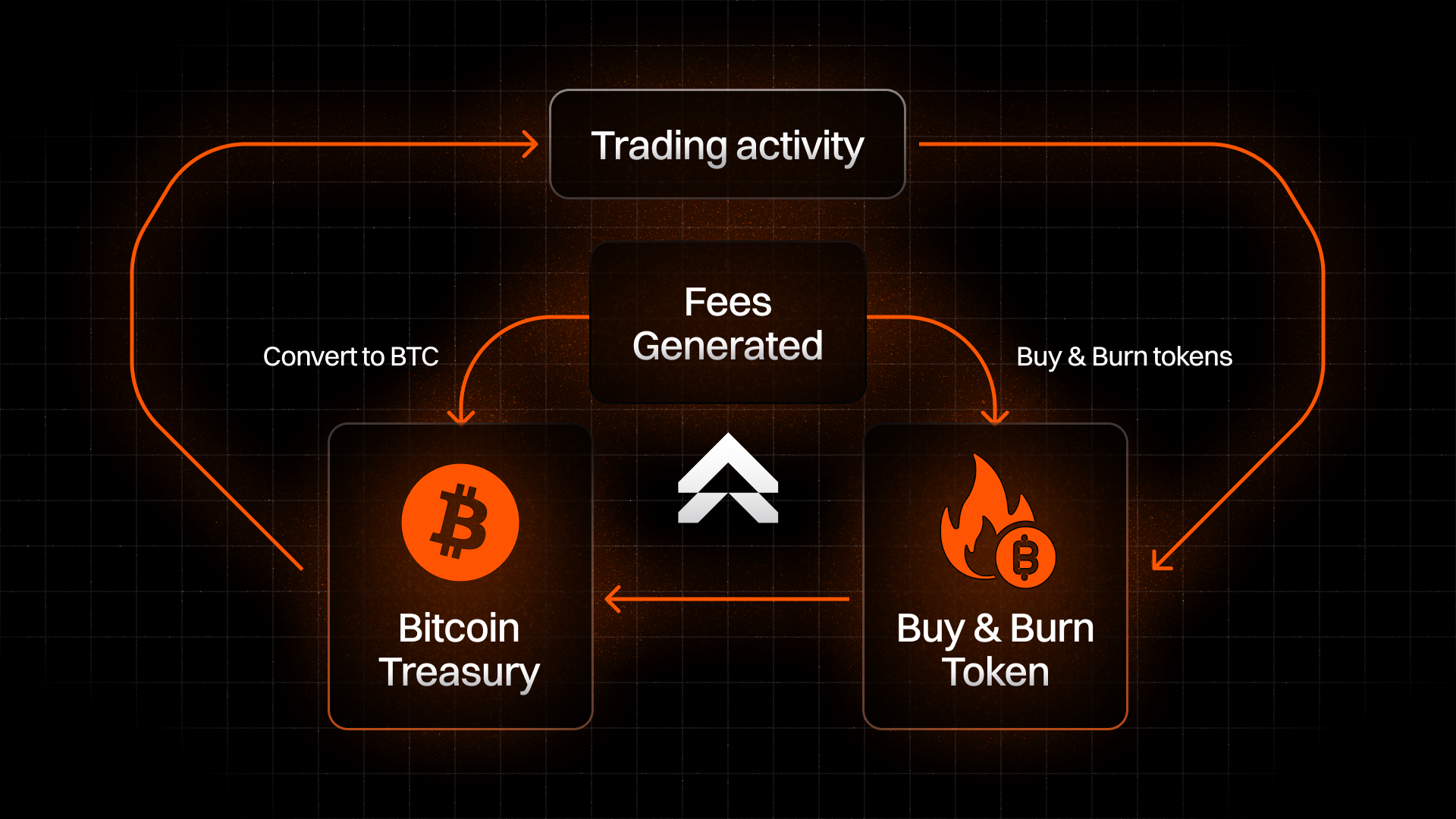 Accumulate is accessed through onchain trading. All interaction with the protocol happens via market activity.
There are no manual deposits, strategy toggles, or configuration options for users.
Every trade involving \$ACCU is treated the same way by the system.
When a trade occurs, protocol fees are collected automatically at the smart
contract level. These fees are the **sole source of capital** used by
Accumulate. - Deterministic and transparent - No external revenue streams - No
reliance on third-party funding - No dynamic fee adjustments The protocol does
not adjust fees based on volume, volatility, or price.
Collected fees are split according to **fixed rules**:
One portion is used to acquire Bitcoin
One portion is used to buy back \$ACCU and burn it
These actions are protocol-defined and do not change over time unless
explicitly upgraded through governance.
When buybacks are executed, \$ACCU is purchased directly from the market and
sent to an **irrecoverable address**.
Burned tokens cannot be recovered, reused, or reissued.
This process reduces circulating supply over time as long as trading activity
continues.
Bitcoin purchases are executed using the portion of fees allocated for accumulation. Acquired Bitcoin is transferred to the protocol treasury.
Once Bitcoin enters the treasury, it is **never sold**. There is no logic for liquidation, rebalancing, or conversion into other assets.
***
## Key Principles
Every action follows predefined rules. The protocol cannot deviate from its
programmed behavior.
Market conditions do not affect protocol execution. Volatility, price
movements, and external events are ignored.
All transactions occur onchain and can be independently verified by anyone.
As long as trading activity exists, the accumulation and burn mechanisms
continue operating.
***
## What Happens Next
Learn how Bitcoin is stored and secured
Understand \$ACCU supply mechanics
See who controls what and how changes are made
Explore the protocol's security approach
Accumulate is accessed through onchain trading. All interaction with the protocol happens via market activity.
There are no manual deposits, strategy toggles, or configuration options for users.
Every trade involving \$ACCU is treated the same way by the system.
When a trade occurs, protocol fees are collected automatically at the smart
contract level. These fees are the **sole source of capital** used by
Accumulate. - Deterministic and transparent - No external revenue streams - No
reliance on third-party funding - No dynamic fee adjustments The protocol does
not adjust fees based on volume, volatility, or price.
Collected fees are split according to **fixed rules**:
One portion is used to acquire Bitcoin
One portion is used to buy back \$ACCU and burn it
These actions are protocol-defined and do not change over time unless
explicitly upgraded through governance.
When buybacks are executed, \$ACCU is purchased directly from the market and
sent to an **irrecoverable address**.
Burned tokens cannot be recovered, reused, or reissued.
This process reduces circulating supply over time as long as trading activity
continues.
Bitcoin purchases are executed using the portion of fees allocated for accumulation. Acquired Bitcoin is transferred to the protocol treasury.
Once Bitcoin enters the treasury, it is **never sold**. There is no logic for liquidation, rebalancing, or conversion into other assets.
***
## Key Principles
Every action follows predefined rules. The protocol cannot deviate from its
programmed behavior.
Market conditions do not affect protocol execution. Volatility, price
movements, and external events are ignored.
All transactions occur onchain and can be independently verified by anyone.
As long as trading activity exists, the accumulation and burn mechanisms
continue operating.
***
## What Happens Next
Learn how Bitcoin is stored and secured
Understand \$ACCU supply mechanics
See who controls what and how changes are made
Explore the protocol's security approach